


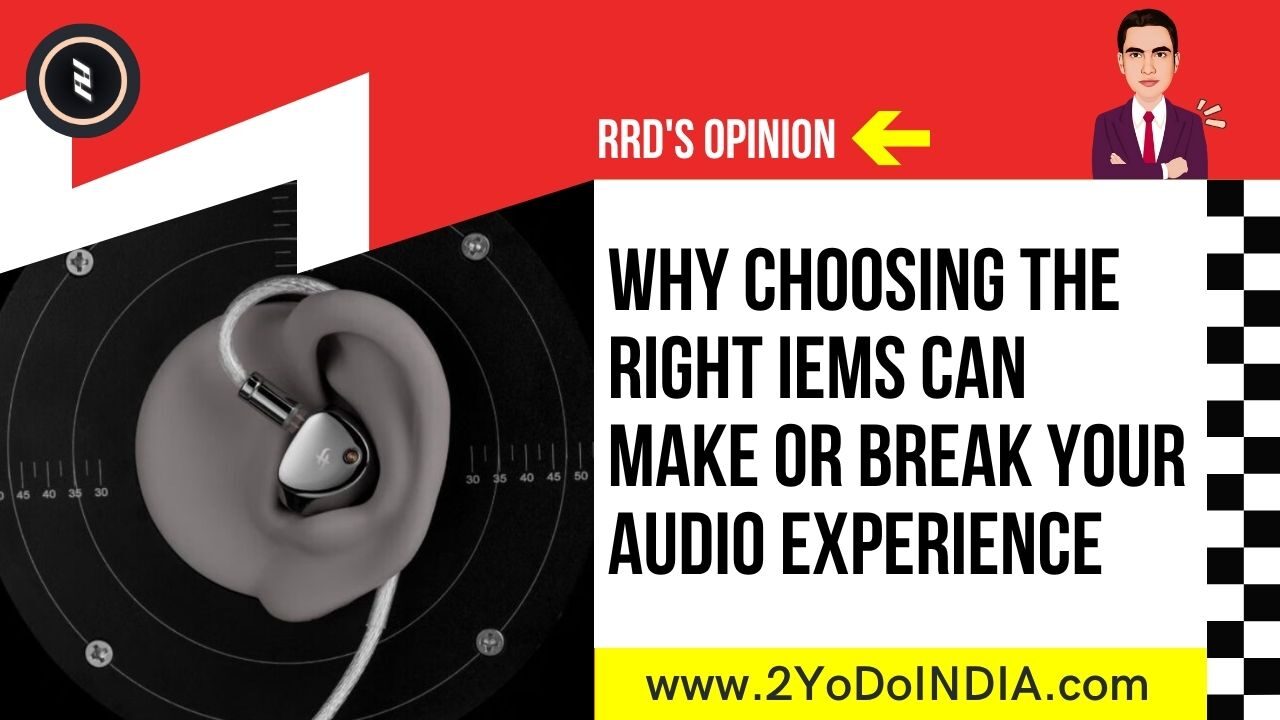
If you have ever into the world of audio gear, you may come across the term IEM, or In-Ear Monitors. As IEM often talk for delivering better sound than traditional headphones, and that’s true to a point.
IEMs are built for precision and isolation, which is why they are the choice for musicians and sound engineers.
You must have seen performers wearing them on stage, those small earpieces that look almost invisible under the lights.
Many users use IEMs for everyday listening, too.
But, there are a few things worth thinking about before buying these, whether it’s for studio work or your daily playlist.
Why You Should Buy IEMs?
Before you even look at specification, features or prices, you should know Why am I buying IEMs?
If you are a musician or a live performer, you may want IEMs that offer accurate sound monitoring and a snug fit that blocks external noise during performances.
But, if you’re just looking for better audio for your daily or casual listening, your priorities will be different.
You might care more about comfort, bass, or build quality than professional aspect.
As said earlier, some people buy IEMs simply because they have heard that they sound better than earbuds.
That can be true, but it depends on the model and the tuning.
A pair of well-tune budget IEMs can sound great for everyday use and a high-end pair tune for studio accuracy might actually feel flat for casual listening.
Driver
The driver is the small speaker inside your IEM that converts electrical signals into sound.
There are many driver types which handle sound in different ways, and knowing the basics can help you understand what to expect from a pair.
- Dynamic Drivers: These are the most common driver you see on budget IEMs. They’re good at producing strong bass and natural sound with a warmer tone.
- Balanced armature (BA) Drivers: These are smaller and more precise, commonly use in multi-driver setups for detail sound reproduction. They can sound cleaner but might lack the low-end punch of dynamic drivers.
- Planar magnetic Drivers: Found in higher-end IEMs, these offer a more open and detail sound but can be power-hungry.
- Hybrid Setups: IEMs also use a mix or hybrid of drivers. As there can be a dynamic driver for bass and BA drivers for mids and highs to get the best of both worlds.
Fitting and Comfort
One of the mistakes people make is ignoring fitting.
Even the best-sounding IEMs will feel terrible if they don’t fit your ears properly and a poor fit can ruin the sound, especially the bass response.
IEMs usually come with multiple ear tips, silicone, foam, or hybrid types.
The seal they create determines how well you hear the full frequency range.
Foam tips often gives better isolation and comfort and silicone tips are easier to clean and last longer.
If you can, try different sizes before settling.
A slightly larger tip might seal better and a smaller one might be more comfortable for long sessions.
And if you are serious about sound or comfort, you can even get custom-fit IEMs (CIEMs) made from ear impressions.
As they cost more, but they will be a perfect fit.
Sound Signature
Everyone hears differently, and everyone has their own taste in sound.
Some prefer warm, bass-heavy audio and others like balanced or bright tones with detail treble.
This is where the term sound signature comes in.
In simple words, you can call it an overall “flavor” of the sound.
- V-Shaped: Boost bass and treble, recessed mids. Ideal for casual listening.
- Balanced: Even across frequencies and good for critical listening or mixing.
- Warm: Smooth mids and lows and is great for long listening sessions.
- Bright: Emphasizes treble and detail and can sound sharp if overdone.
So before buying an IEM, it is best to check reviews or frequency response graphs of the model you are considering.
They can give you a idea of how a pair of IEM might sound.
Build Quality and Cable Design
IEMs get use daily, they were put into pockets, bags, and sometimes drop, so build quality matters. Metal or resin shells tend to be more durable than cheap plastic ones.
Detachable cables are also worth paying attention to as they make it easier to replace a damage cable without buying a new pair.
Many IEMs use standard connectors like 2-pin or MMCX, so you can even upgrade the cable later for better comfort.
You may also want to check for features like memory wire to helps keep the cable behind your ear, or modular plugs that let you switch between 3.5mm, 4.4mm, and 2.5mm jacks depending on your device.
Source Power
IEMs don’t all behave the same way when plug into your phone or audio player.
Some require more power to sound their best.
Low-impedance IEMs (below 32 ohms) are easy to drive from most smartphones.
But higher-impedance models might need a DAC (digital-to-analog converter) or portable amp to reach full potential.
Without enough power, they might sound dull or quiet.
If you’re not planning to use extra equipment, go for IEMs with low impedance and high sensitivity.
They will pair well with your phone or laptop without any issues.
Price
It’s easy to make sure that expensive IEMs automatically sound better.
But, that is not always the case.
There is a point of diminishing returns in audio gear.
Expensive IEM might sound only slightly better than a cheap one, especially if your music source is just a phone or streaming app.
It’s smarter to invest in something balance rather than chasing specifications or brand value.
RRD’s Opinion
Buying IEMs can feel difficult at first as there are too many models, too many opinions, and too many technical terms, but it doesn’t have to be overwhelming.
Start by understanding what kind of listener you are and what kind of sound you want.
You should focus on comfort and build quality as much as sound qwality, also remember the best IEMs aren’t necessarily the most expensive ones, but the ones that make your music sound right to you taste.
JOIN OUR WHATSAPP CHANNEL CLICK HERE
Rahul Ram Dwivedi (RRD) is a senior journalist in 2YoDoINDIA.
NOTE : Views expressed are personal.


